
.svg)
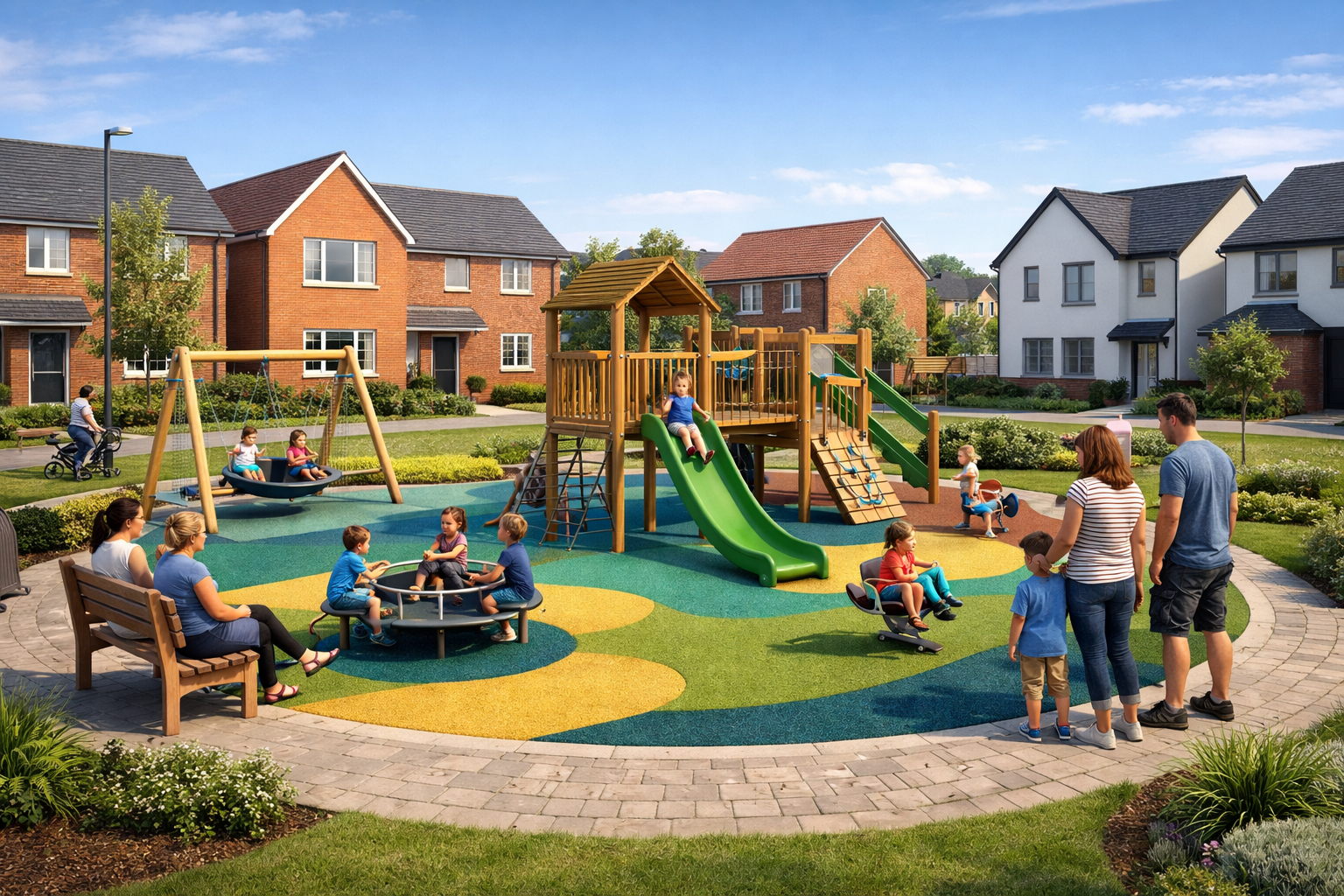


Playground provision has become an essential part of new housing developments and residential schemes across the UK. From large multi-phase estates to smaller infill sites and regeneration projects, high-quality play areas are now expected as part of planning compliance, placemaking and long-term community wellbeing.
For developers, play provision is no longer a simple planning condition to discharge. Well-designed playgrounds enhance the quality of place, improve resident satisfaction and contribute directly to the long-term value and marketability of a development.
At Morti Sport & Play, we design and deliver playground equipment for housing developments that supports planning obligations, resident wellbeing and sustainable estate management. Our work is trusted by developers and planning consultants delivering play areas as part of new-build and regeneration schemes.
Early in the planning process, developers may also need to work closely with local authorities — see Councils & Local Authority Playground Equipment for guidance on public-sector interfaces and compliance expectations.
Why Playground Provision Matters in Housing Developments
Play areas within residential developments play a far wider role than providing recreational space alone. When planned effectively, playground provision:
- Supports healthy child development and active lifestyles
- Encourages social interaction and community cohesion
- Enhances the attractiveness of family housing
- Contributes positively to placemaking and identity
- Increases the long-term desirability of the development
In competitive housing markets, high-quality play environments are increasingly used as a differentiator, helping developments stand out and appeal to families seeking long-term homes rather than short-term accommodation.
Planning-Led Play Provision for New Estates
Playground provision in housing developments is typically defined through planning conditions, masterplans and developer obligations.
Common requirements may include:
- Formal equipped play areas
- Informal doorstep play
- Age-zoned provision for different stages of childhood
- Accessible and inclusive design
- Integration with green infrastructure and landscape
Early-stage integration of play into the masterplanning process ensures that:
- Space is allocated efficiently
- Safety and visibility are optimised
- Access routes are logical and inclusive
- Long-term maintenance requirements are considered
Where play provision is delivered through planning obligations, developers may also need to reference Playground Equipment for Housing Developments to ensure compliance and design continuity across the scheme.
Design Principles for Residential Play Areas
Successful residential play spaces are carefully planned environments rather than collections of individual items.
Key design principles include:
Clear Sightlines & Natural Surveillance
Play areas should be visible from surrounding homes and pedestrian routes, supporting supervision and creating a sense of safety.
Age-Zoned & Multi-Age Play
Well-designed estates provide a balance of:
- Early years play
- Junior play
- Older children’s activity zones
This allows children to remain within the community as they grow.
Integration with Landscape
Residential play works best when integrated with:
- Green corridors
- Sustainable drainage features
- Natural planting
- Seating and social spaces
This supports informal play, family use and intergenerational interaction.
Where inclusive design is required, designers may also wish to explore SEN & Inclusive Playground Equipment and Disability Playground Equipment to support accessible residential play.
Types of Playground Provision in Housing Developments
Play provision within residential schemes may take many forms depending on scale, density and planning context.
Typical approaches include:
- Central equipped play areas serving the wider estate
- Local doorstep play spaces within residential clusters
- Linear play integrated into pedestrian routes
- Informal natural play within landscaped areas
- Social play and seating zones for families and carers
In larger schemes, play provision may be delivered in stages alongside housing phases — a strategy explored further in our guide to phased delivery and regeneration projects.
Delivering Long-Term Value Through Durable Design
Unlike temporary installations, residential playgrounds become permanent community assets. Equipment selection and layout therefore play a critical role in:
- Reducing long-term maintenance costs
- Minimising safety interventions
- Supporting managing agent handover
- Protecting developer reputation
We prioritise:
- Durable materials for long-term outdoor exposure
- Low-maintenance finishes and components
- Vandal-resistant design where required
- Equipment with proven service life
This approach supports both planning compliance and sustainable estate management long after initial handover.
Working with Developers & Planning Consultants
We work collaboratively with:
- Residential developers
- Planning consultants
- Landscape architects
- Managing agents
Our role typically includes:
- Early-stage feasibility advice
- Planning-led layout development
- Budget planning and value engineering
- Installation, certification and handover
For projects where play provision interfaces directly with public-sector stakeholders, developers may also find it helpful to reference Councils & Local Authority Playground Equipment for guidance on governance, safety and compliance.
Speak to Housing Development Playground Specialists
If you’re planning a new housing development or residential regeneration project, our team can provide expert guidance on playground provision from concept through to delivery.
We support developers across the UK in creating safe, compliant and valuable play environments that enhance both communities and developments.
Planning Guidance for Playground Provision in Housing Developments
Playground provision within housing developments is shaped by a combination of national planning policy, local authority guidance and developer obligations. Understanding this framework early in the design process helps ensure that play provision is compliant, deliverable and aligned with long-term community needs.
In the UK, residential play provision is commonly informed by:
- Local authority open space and play strategies
- National Planning Policy Framework (NPPF) guidance on healthy communities
- Fields in Trust and Sport England standards for play and recreation
- Planning conditions attached to outline and reserved matters approvals
These frameworks influence:
- The quantity of play space required
- Age groups to be served
- Accessibility and inclusion expectations
- Phasing and delivery timescales
For developers delivering play provision through planning obligations, further detail is explored in our guide to Section 106 playground requirements for developers, which explains how S106 and CIL contributions shape residential play delivery.
Aligning Play Provision with Planning Conditions
Successful residential play provision begins at masterplanning stage. Early alignment between:
- Planning consultants
- Landscape architects
- Developers
- Local authority officers
ensures that play areas:
- Meet adopted standards and policies
- Integrate with green infrastructure
- Support inclusive design principles
- Remain deliverable within budget and programme
Where play provision interfaces directly with public-sector stakeholders, developers may also find it helpful to reference Councils & Local Authority Playground Equipment for guidance on compliance, safety and governance requirements in publicly accessible environments.
Designing for Inclusion in Residential Communities
Modern planning policy increasingly expects residential play areas to support inclusive and accessible environments.
Inclusive residential play design may include:
- Ground-level and step-free access
- Shared-use play features
- Sensory and movement-based equipment
- Clear circulation routes for carers and families
For schemes where inclusion is a core planning requirement, further guidance can be found within SEN & Inclusive Playground Equipment and Disability Playground Equipment, which explore accessible play provision in greater detail.
Supporting Long-Term Estate Management
Beyond planning approval, residential play provision must perform as a long-term estate asset.
Key considerations for developers and managing agents include:
- Inspection and maintenance regimes
- Liability and risk management
- Handover documentation and certification
- Whole-life asset performance
This long-term view ensures that play areas remain safe, valued and operational throughout the life of the development.
For a complete overview of compliant design, delivery and management strategies, explore Playground Equipment for Housing Developments, which brings together planning, design and delivery guidance for residential schemes.
Next Steps in Residential Playground Planning
Playground provision within housing developments continues to evolve alongside planning policy, placemaking principles and community expectations.
Further guidance in this series includes:
- Section 106 Playground Requirements Explained for Developers
- Designing Play Areas for Residential Communities
- Inclusive Play in Housing Developments
- Phased Playground Delivery for Large Housing Schemes
- Managing & Maintaining Play Areas on New Housing Estates
Together, these resources provide a complete framework for planning, designing and delivering high-quality residential play environments.


