
.svg)


Inclusive vs Accessible Playgrounds: What’s the Difference?
The terms inclusive playground and accessible playground are often used interchangeably, but they do not mean the same thing. While accessibility is an important part of playground design, true inclusion goes much further.
Understanding the difference helps schools make better decisions when planning new playgrounds or upgrading existing ones.
Schools new to inclusive play may find it useful to begin with our guide on how to design an inclusive playground for schools, which explains the wider design principles in detail.
What Is an Accessible Playground?
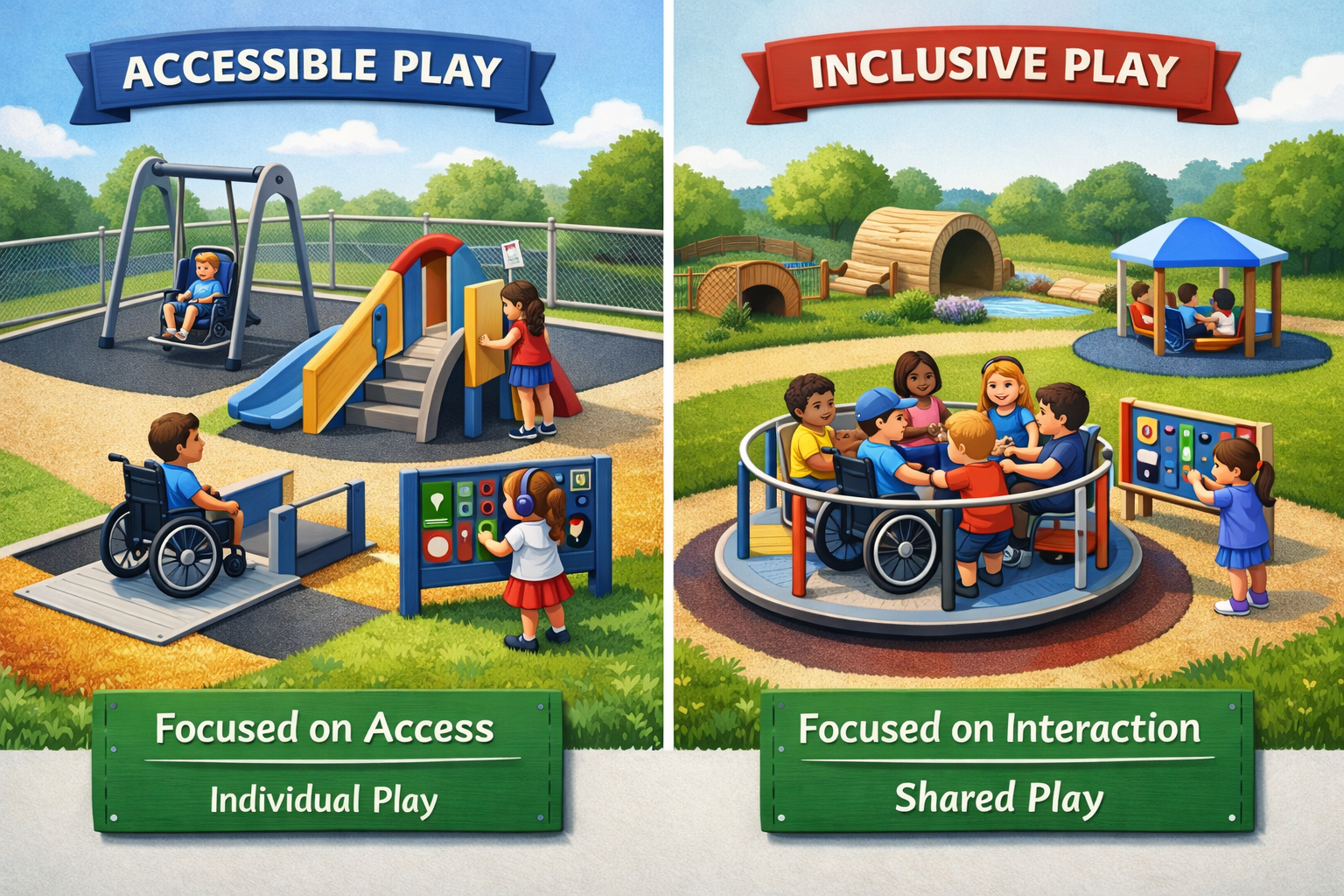
An accessible playground is designed so children with physical disabilities can enter and move around the playground.
Accessible playground features often include:
- Step-free access routes
- Firm, even playground surfacing
- Equipment with transfer access
- Space for wheelchairs and mobility aids
Accessibility focuses on access — ensuring children can reach play equipment safely.
While this is essential, accessibility alone does not guarantee meaningful play or social inclusion.
What Is an Inclusive Playground?
An inclusive playground is designed so all children can play together, regardless of ability, confidence or sensory needs.
Inclusive playgrounds consider:
- Shared play experiences
- Multiple ways to use the same equipment
- Sensory, physical and social play
- Emotional regulation and choice
This is why inclusive playgrounds rely on thoughtful layout and equipment selection, often drawing on modern inclusive playground equipment that supports group play and flexibility.
Why Accessible Playgrounds Are Not Always Inclusive
A playground can be fully accessible but still feel exclusive.
For example:
- Equipment may be accessible but used by only one child at a time
- Play experiences may separate children by ability
- Sensory needs may not be considered
Inclusive playground design looks beyond access to ask:
Can children play together, interact naturally and feel included?
Schools aiming to move beyond access often incorporate principles from SEN playground design to better support sensory and emotional needs.
Inclusive Playgrounds Focus on Shared Experiences
The key difference between inclusive and accessible playgrounds is shared play.
Inclusive playgrounds encourage:
- Cooperative play
- Social interaction
- Flexible use of equipment
- Choice without labels
Equipment such as basket swings, group seesaws and interactive panels allows children with different abilities to enjoy the same play experience together.
The Role of Layout and Zoning
Inclusive playgrounds rely heavily on layout. Zoning helps balance active, calm and sensory play while keeping children connected.
Well-designed layouts:
- Avoid isolating quieter areas
- Maintain clear sightlines
- Support free movement between zones
Many schools use a combination of inclusive equipment and playground design and installation expertise to ensure accessibility and inclusion work together.
Surfacing: Accessibility Meets Inclusion
Playground surfacing is where accessibility and inclusion often overlap.
Inclusive playground surfacing should:
- Support mobility aids
- Allow smooth movement between areas
- Reduce trip hazards
- Meet UK safety standards
This is why playground surfacing is a key consideration when designing both accessible and inclusive playgrounds.
Why Inclusive Playgrounds Benefit All Children
Inclusive playgrounds are not only for children with additional needs. When playgrounds are inclusive, all children benefit from:
- Better social interaction
- Increased confidence
- Reduced conflict
- Improved wellbeing
Inclusive playgrounds create environments where differences are normalised and play feels welcoming to everyone.
Choosing the Right Approach for Your School
When planning a playground project, schools should aim for both accessibility and inclusion.
Accessible playgrounds remove physical barriers.
Inclusive playgrounds remove social and emotional barriers.
Schools planning new playgrounds or upgrades are encouraged to explore inclusive playground equipment and seek professional guidance to ensure inclusion is built in from the start.
Inclusive and Accessible Playgrounds Explained
Playgrounds are central to school life, supporting physical activity, social development and wellbeing. While accessible playgrounds focus on entry and movement, inclusive playgrounds focus on how children play together.
Understanding this difference helps schools create playgrounds that truly support every child.
Accessible Playgrounds Focus on Entry
Accessible playgrounds ensure children can access playground equipment safely. This often includes step-free routes and firm surfacing.
Accessibility is essential, but on its own it does not guarantee inclusive play.
Inclusive Playgrounds Focus on Participation
Inclusive playgrounds are designed so children can take part in shared play experiences. Equipment, layout and play choice all work together to support inclusion.
Schools often achieve this by selecting inclusive playground equipment that allows flexible, group-based play.
Layout and Surfacing in Inclusive Playgrounds
Playground layout and surfacing influence how inclusive a playground feels. Clear routes, connected zones and consistent playground surfacing help children move confidently throughout the space.
Creating Playgrounds That Work for Everyone
Inclusive playgrounds combine accessibility with thoughtful design. When playgrounds support shared play, choice and flexibility, every child benefits.
Schools exploring playground improvements can learn more about inclusive playground equipment, SEN playground design, and professional playground design and installation to create playgrounds that work for everyone.


