
.svg)


Inclusive Playground Equipment for Primary Schools
Inclusive playground equipment helps primary schools create outdoor spaces where children of different abilities can play together. Rather than separating pupils by need, inclusive playground design focuses on shared experiences, choice and accessibility within the same environment.
For UK primary schools, inclusive playground equipment supports physical activity, social interaction and confidence while remaining practical, durable and easy to supervise.
What Inclusive Play Means in Primary Schools
Inclusive play is about enabling children to participate at their own level while remaining part of the wider playground community. In primary schools, this means providing equipment that allows multiple ways to engage — physically, socially and imaginatively.
Before selecting inclusive equipment, it’s important to understand how layout and play behaviour influence outdoor spaces. Our guide on how to design a school playground explains these foundational principles in more detail.
Inclusive Playground Equipment That Encourages Shared Play
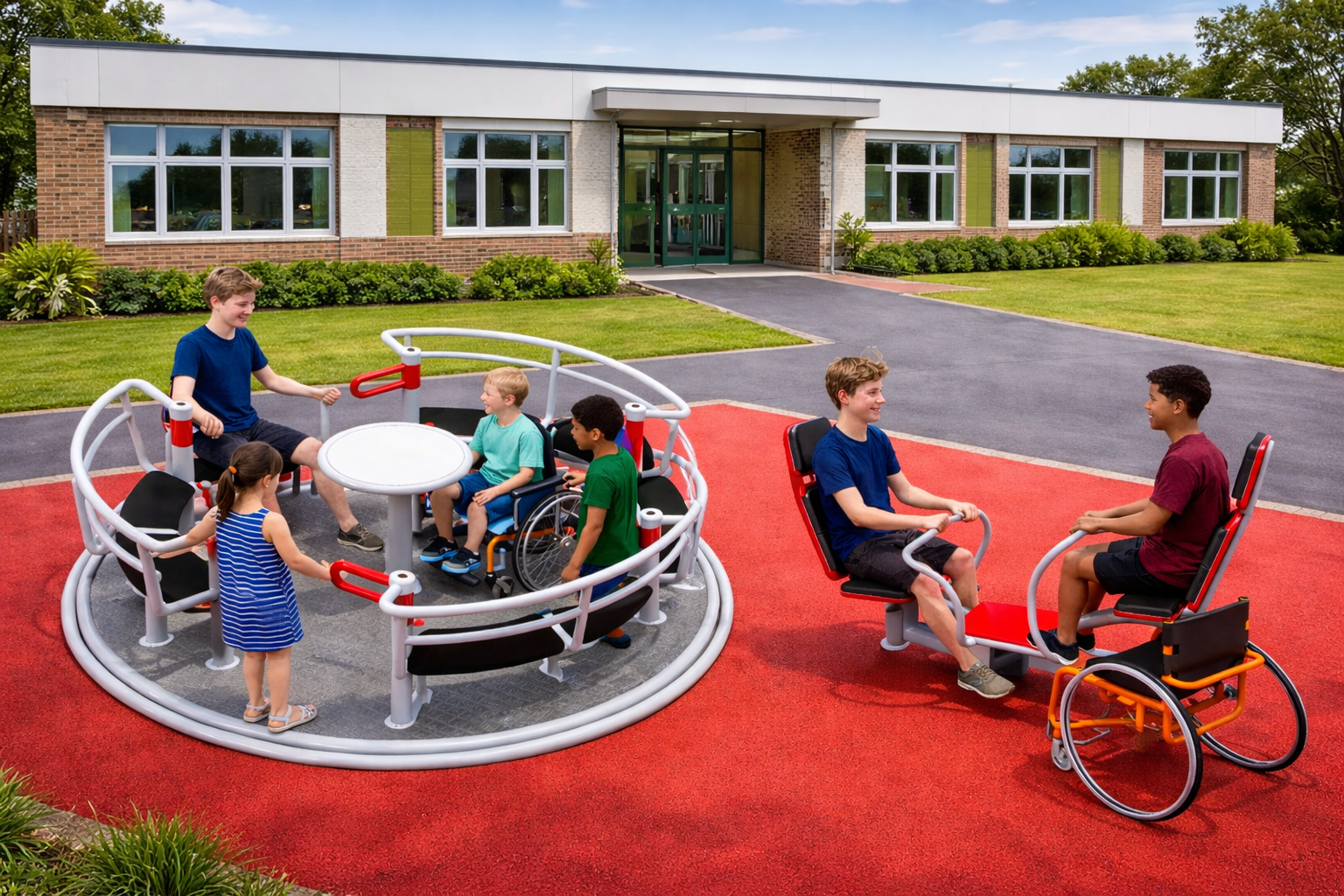
The most effective inclusive playground equipment is designed for shared use rather than individual access only. This encourages interaction between children of different abilities and reduces unintentional segregation.
Examples of shared-use inclusive playground equipment include:
- Group swings and inclusive seesaws
- Spinners and carousels with seated and standing options
- Low-level climbing and balance equipment
- Equipment offering multiple entry points or play styles
Shared equipment naturally supports cooperation, turn-taking and social development.
Supporting Mixed-Ability Play in Primary Schools
Primary school playgrounds often include children with a wide range of physical, sensory and social needs. Inclusive playground equipment allows children to choose how they play while remaining part of the same space.
Many of the ideas used in inclusive playgrounds also support general playground planning. Schools exploring broader equipment inspiration may find value in school playground equipment ideas for primary schools, where inclusion is considered alongside active play.
Inclusive Play Without Overcrowding the Playground
Inclusive playground design does not require more space — it requires better use of space. Carefully selected equipment can support inclusive play while maintaining clear circulation and supervision.
Inclusive playground equipment for primary schools should:
- Fit within existing playground layouts
- Allow multiple children to play simultaneously
- Avoid creating bottlenecks or isolated areas
- Support both energetic and calmer play
Thoughtful placement ensures inclusive equipment enhances the playground rather than dominating it.
Safety, Supervision and Durability
Inclusive playground equipment must meet the same safety and durability expectations as all school playground equipment. In primary schools, this includes:
- Compliance with EN 1176 safety standards
- Clear sightlines for staff supervision
- Robust materials for daily use
- Logical layouts that reduce conflict
Inclusive design should support safe play without limiting challenge or enjoyment.
Bringing Inclusive Playground Equipment Together
Inclusive playground equipment works best when integrated into the wider playground design rather than treated as a standalone feature. When inclusive equipment is placed alongside climbing, balancing and social play elements, playgrounds feel cohesive and welcoming to all children.
Schools planning inclusive upgrades are encouraged to explore School Playground Equipment (UK) to see how inclusive play fits within a complete primary school playground environment.
Inclusive Playground Equipment for UK Primary Schools
Inclusive playground equipment helps UK primary schools create outdoor spaces that support shared play, accessibility and social interaction. By selecting equipment that allows multiple ways to engage, schools can promote inclusive play without segregating children or compromising supervision and safety.


