
.svg)
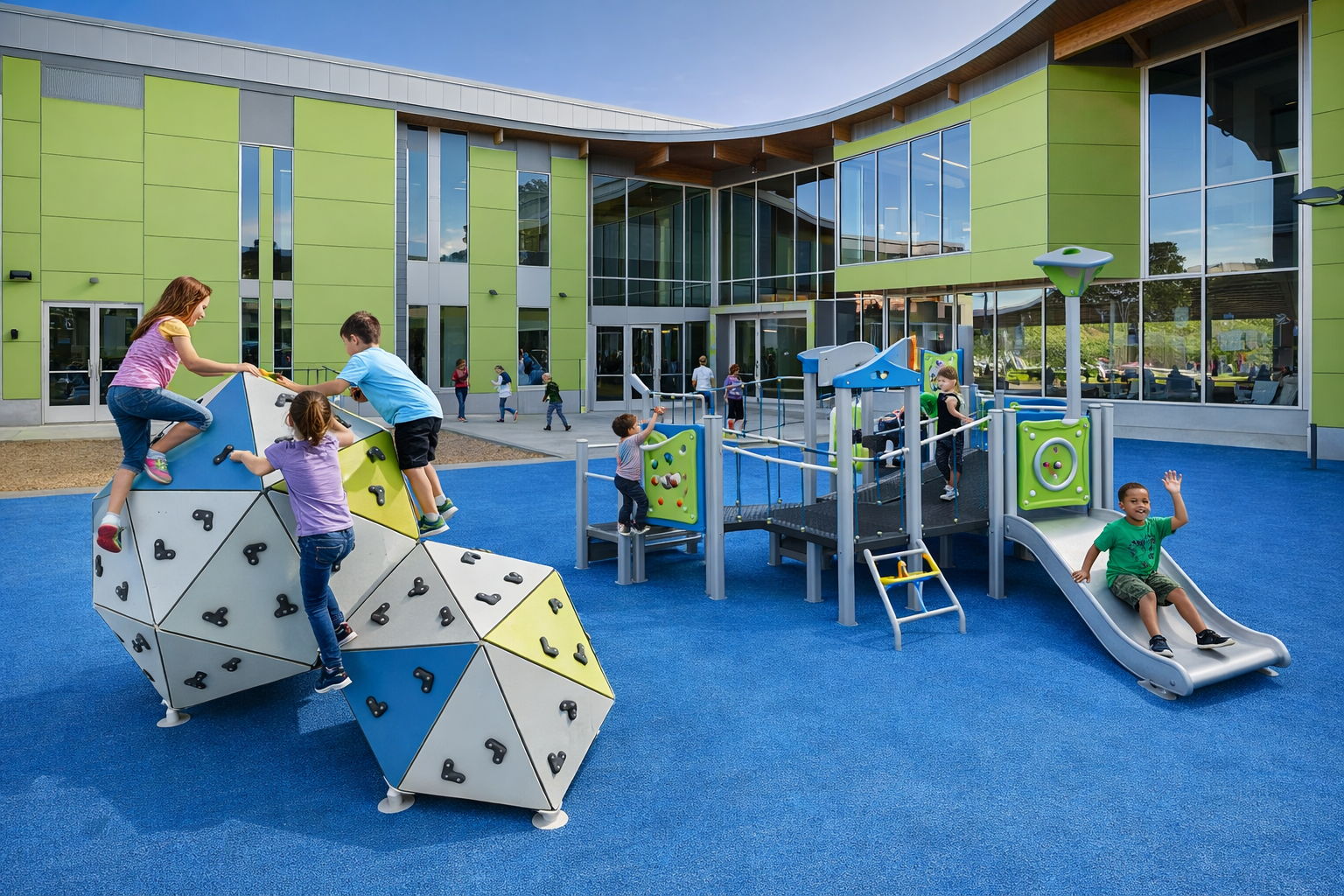


Inclusive Playground Equipment for Mixed-Ability Play
Mixed-ability play is a natural part of everyday life in UK primary schools. Children bring different physical abilities, confidence levels and sensory needs into the playground, often within the same class group.
Inclusive playground equipment supports mixed-ability play by allowing children to participate together, rather than being separated by ability or need. When designed well, playgrounds encourage shared experiences, cooperation and confidence for all pupils.
What Mixed-Ability Play Looks Like in Primary Schools
In real school environments, mixed-ability play happens when children:
- Choose different ways to use the same equipment
- Play alongside one another at their own pace
- Join in group play without pressure or restriction
- Move between active and calmer play freely
Designing for mixed-ability play means recognising these behaviours and planning equipment that supports flexibility and choice.
Before selecting equipment, schools should consider how layout and play behaviour shape outdoor spaces. Our guide on how to design a school playground explains these principles in more detail.
Equipment That Supports Mixed-Ability Play
The most effective mixed-ability playground equipment is designed for shared use, not single-purpose access.
Examples include:
- Inclusive seesaws that allow children to face one another
- Group swings that support multiple users
- Spinners and carousels with seated and standing options
- Low-level climbing and balance equipment
- Equipment with more than one way to enter or use it
These features allow children to engage at different levels while remaining part of the same play activity.
Why Shared Equipment Matters
Shared playground equipment reduces unintentional segregation. When children can play together, social interaction happens naturally.
Shared equipment helps children:
- Learn cooperation and turn-taking
- Build confidence through observation and participation
- Develop empathy and communication skills
- Feel included within the playground community
Schools looking for broader inspiration may also benefit from school playground equipment ideas for primary schools, where mixed-ability play is considered alongside active and social play.
Balancing Challenge and Accessibility
Mixed-ability playground design is about balance. Equipment should offer challenge without excluding children who need alternative ways to engage.
This balance can be achieved by:
- Providing graduated levels of difficulty
- Offering choice rather than forcing participation
- Combining active play with calmer play nearby
- Ensuring clear routes between play areas
Inclusive playground equipment allows children to decide how they play, rather than limiting participation.
Mixed-Ability Play in Everyday School Spaces
Mixed-ability play does not require specialist zones or additional space. Many schools successfully support inclusive play by integrating shared-use equipment into their existing playground layout.
Exploring School Playground Equipment (UK) helps schools understand how mixed-ability play fits naturally into primary school playground environments without increasing complexity or supervision demands.
Mixed-Ability Playground Equipment for UK Primary Schools
Inclusive playground equipment for mixed-ability play helps UK primary schools create shared outdoor spaces where children of different abilities can play together. By selecting equipment that supports multiple ways to engage, schools can encourage participation, confidence and social interaction without segregation.


