
.svg)


How to Plan Inclusive Playground Zones
Inclusive playgrounds work best when they are carefully zoned. Rather than relying on individual pieces of equipment, inclusive playground design considers how different types of play sit alongside one another within the playground.
Zoning allows playgrounds to support children with a wide range of needs — from those seeking energetic physical play to those who benefit from quieter, sensory experiences.
Schools new to inclusive design may find it helpful to start with our guide on how to design an inclusive playground for schools, which explains the wider principles behind inclusive layouts.
Why Zoning Matters in Inclusive Playgrounds
Every playground is used differently. Some children head straight for movement and challenge, while others prefer imaginative, social or calm play.
Inclusive playground zoning helps schools to:
- Reduce overcrowding and conflict
- Support emotional regulation
- Encourage positive social interaction
- Offer choice without separation
Well-zoned playgrounds allow children to move between areas freely, remaining part of the shared play environment.
Active Play Zones in Inclusive Playgrounds
Active play zones support physical movement, coordination and confidence. In inclusive playgrounds, active zones should be accessible and designed for shared use.
Examples of inclusive active play include:
- Inclusive swings
- Low-level climbing equipment
- Balance and movement trails
- Accessible roundabouts
Many schools select equipment for these areas from modern inclusive playground equipment ranges that support multiple users and ability levels.
Social Play Zones That Encourage Interaction
Social play zones focus on communication, cooperation and imaginative play. These areas are particularly important for children who may struggle to initiate interaction in more energetic spaces.
Social play zones often include:
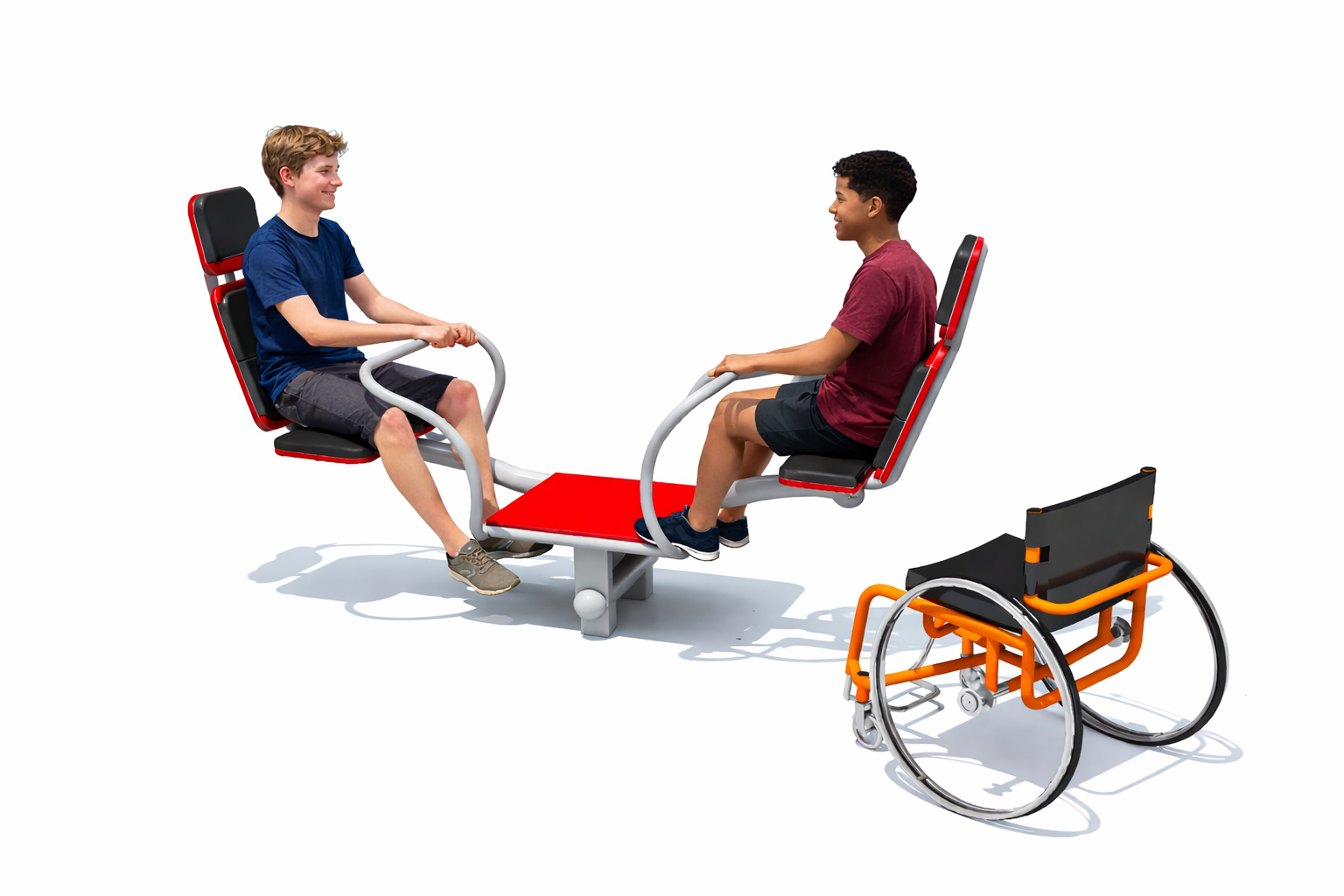
- Group seesaws
- Role-play structures
- Interactive play panels
- Musical play equipment
When integrated into the main playground, social play zones help children connect naturally without feeling singled out.
Sensory and Calm Zones for Regulation
Sensory and calm zones provide essential balance within inclusive playgrounds. These areas allow children to step away from noise and activity when needed.
Sensory zones may include:
- Sand and water play
- Tactile and visual panels
- Quiet seating areas
- Natural textures and materials
Schools designing these spaces often draw on principles from SEN playground design to support sensory regulation and emotional wellbeing.
Connecting Playground Zones Effectively
Zoning should never create isolation. Inclusive playground zones must remain visually and physically connected.
Effective layouts consider:
- Clear, accessible pathways
- Smooth transitions between zones
- Avoiding physical barriers
- Maintaining sightlines for supervision
Playground surfacing plays an important role here, with many schools reviewing playground surfacing options to ensure accessibility across all zones.
Designing Zones for Mixed Ages and Abilities
Most school playgrounds are used by children of different ages throughout the day. Inclusive zoning avoids rigid separation and instead offers graduated challenges.
For example:
- Active zones with varied difficulty levels
- Social zones that work for individuals or groups
- Sensory zones that remain welcoming to all
This approach allows children to engage at their own pace while staying part of the shared playground experience.
Bringing Playground Zones Together
Inclusive playground zoning works best when planned as part of a wider design process. Schools often work with specialists in playground design and installation to ensure zones function together rather than as separate areas.
A well-zoned playground feels intuitive, inclusive and flexible — supporting every child throughout the school day.
Inclusive Playground Zones That Work for Everyone
When playground zones are thoughtfully planned, inclusive playgrounds become calmer, more engaging and more enjoyable for all children.
Zoning helps schools create playgrounds that support physical activity, social development and emotional wellbeing — without compromise.
Planning Inclusive Playground Zones for Schools
Playgrounds are most successful when they offer a variety of play experiences. Inclusive playgrounds use zoning to balance active, social and sensory play across the space.
Rather than separating children by ability, inclusive playground zoning allows playgrounds to support different needs within one shared environment.
Why Zoning Improves Inclusive Playgrounds
Zoned playgrounds help children:
- Choose how they play
- Move between activities easily
- Feel comfortable and included
This makes playgrounds calmer, more engaging and easier to manage during busy playtimes.
Active Zones in Inclusive Playgrounds
Active playground zones support movement and physical development. Inclusive playgrounds design these areas to be accessible and enjoyable for as many children as possible.
Inclusive school playground equipment is often used to create active zones that encourage shared use rather than competition.
Sensory and Calm Playground Zones
Sensory playground zones give children space to regulate and explore at their own pace. These areas are particularly valuable in inclusive and SEN-friendly playgrounds.
Schools often integrate sensory features using inclusive playground equipment that blends naturally into the wider playground.
Surfacing and Accessibility Across Playground Zones
Playground surfacing affects how easily children move between zones. Inclusive playgrounds use consistent, accessible surfacing to maintain flow and safety.
This is why playground surfacing is a key consideration when planning playground zones.
Creating Playground Zones That Work Together
Inclusive playground zoning is about balance. When playgrounds offer active, calm and sensory zones that connect naturally, every child benefits.
Schools planning zoning improvements can explore inclusive playground equipment, SEN playground design, and professional playground design and installation to create playgrounds that truly support all children.


