
.svg)


How to Design a School Playground for Primary Schools
Designing a school playground is about far more than selecting individual pieces of equipment. For UK primary schools, playgrounds must support physical activity, social interaction, learning and inclusion — all within a safe, durable and manageable environment.
A well-designed primary school playground encourages children to be active, confident and engaged during break times, while also supporting supervision and long-term use.
This guide explains the key principles schools should consider when planning or upgrading a primary school playground.
Start with How the Playground Is Used
Before choosing equipment, it’s important to understand how the playground is used throughout the school day.
Primary school playgrounds typically need to support:
- Large numbers of children at once
- Different age groups across Key Stage 1 and Key Stage 2
- Energetic play during break and lunchtime
- Calmer play for children who need space or regulation
Designing with real usage in mind helps prevent overcrowding, conflict and underused areas.
Plan Clear Playground Zones
Effective playground design uses zoning to balance different types of play. Even modest playgrounds benefit from clear, logical layouts.
Primary school playgrounds often include:
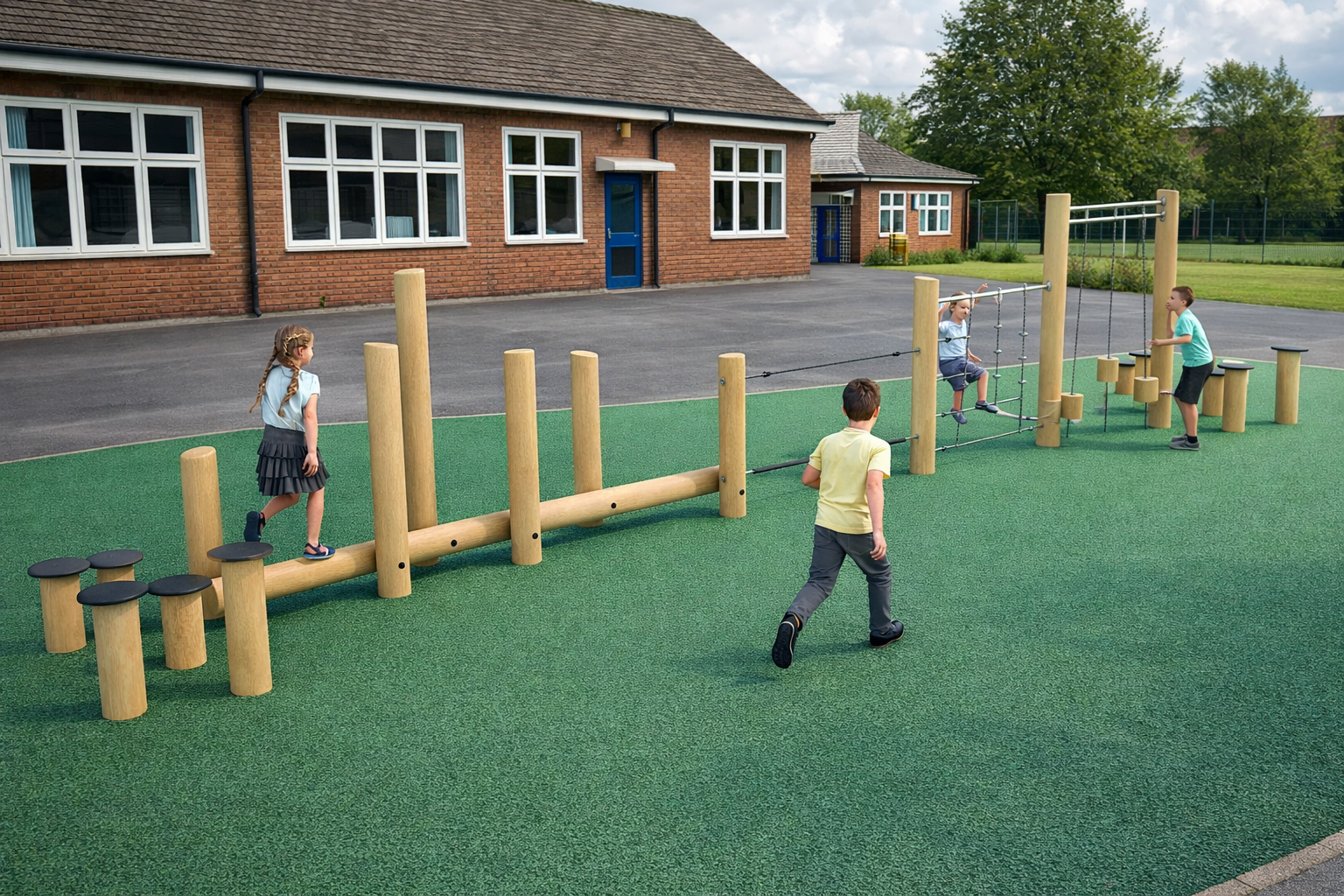
- Active zones for climbing, balancing and movement
- Social play zones for shared equipment and group interaction
- Calmer areas for quieter play and regulation
Zoning helps children choose how they play while remaining part of the wider playground environment.
Choose Age-Appropriate Playground Equipment
Primary school playground equipment should be challenging without being overwhelming. Equipment that is too simple can lead to boredom, while overly complex equipment can increase risk or exclusion.
Well-chosen school playground equipment:
- Supports physical development and coordination
- Encourages cooperation and shared play
- Allows different levels of challenge
- Is suitable for children aged 4–11
Popular choices for primary schools include climbing frames, trim trails, swings, spinners, seesaws and balance equipment.
Design for Inclusive Play in Primary Schools
Modern school playgrounds should support children of different abilities playing together. Inclusive playground design focuses on shared experiences rather than separating children by need.
Inclusive primary school playgrounds often include:
- Shared-use play equipment
- Ground-level and accessible features
- Clear circulation routes
- Equipment that supports group play
Schools looking to improve accessibility and inclusion can explore school playground equipment designed for inclusive play, ensuring no child feels excluded from outdoor play.
Consider Playground Surfacing Early
Playground surfacing plays a critical role in safety, accessibility and long-term performance. Surfacing choices affect how children move through the playground and how equipment is used.
Primary school playground surfacing should:
- Meet UK safety standards
- Support active play and running
- Allow clear supervision
- Be durable and low maintenance
Surfacing should always be considered as part of the overall playground design, not as an afterthought.
Design for Supervision and Safety
Primary school playgrounds must be easy for staff to supervise. Good design improves safety without restricting play.
Key considerations include:
- Clear sightlines across play areas
- Logical equipment placement
- Avoiding hidden or congested spaces
- Compliance with EN 1176 standards
Safe playground design supports confident play while reducing risk and conflict.
Think Long-Term: Durability and Value
School playground equipment is a long-term investment. Choosing robust materials and proven designs helps ensure playgrounds remain safe and enjoyable for years.
Primary schools should prioritise:
- Durable materials suitable for daily use
- Equipment with low maintenance requirements
- Flexible designs that grow with pupils
This approach provides better long-term value for school budgets.
Bringing the Playground Together
The most successful primary school playgrounds are designed as complete environments, not collections of individual products. When layout, equipment and surfacing work together, playgrounds become more engaging, inclusive and manageable.
Schools planning new playgrounds or upgrades are encouraged to explore School Playground Equipment (UK) and seek expert guidance to ensure the playground meets the needs of pupils and staff alike.
Designing Primary School Playgrounds in the UK
Designing a successful primary school playground requires a clear understanding of how children play, move and interact throughout the school day. UK primary school playgrounds must balance physical challenge, inclusive play and safety, while remaining durable and easy to supervise.
Effective school playground design considers equipment choice, layout and surfacing together. Climbing frames, trim trails, swings and balance equipment help support physical development, while shared-use play features encourage cooperation and social interaction. Inclusive playground equipment ensures children of different abilities can play together in the same space.
When planned as a complete environment, school playground equipment can support active play, learning and wellbeing for primary-aged children, creating outdoor spaces that remain engaging and functional year after year.


