
.svg)


How Playgrounds Add Value to Housing Developments (ROI, Placemaking & Sales Impact)
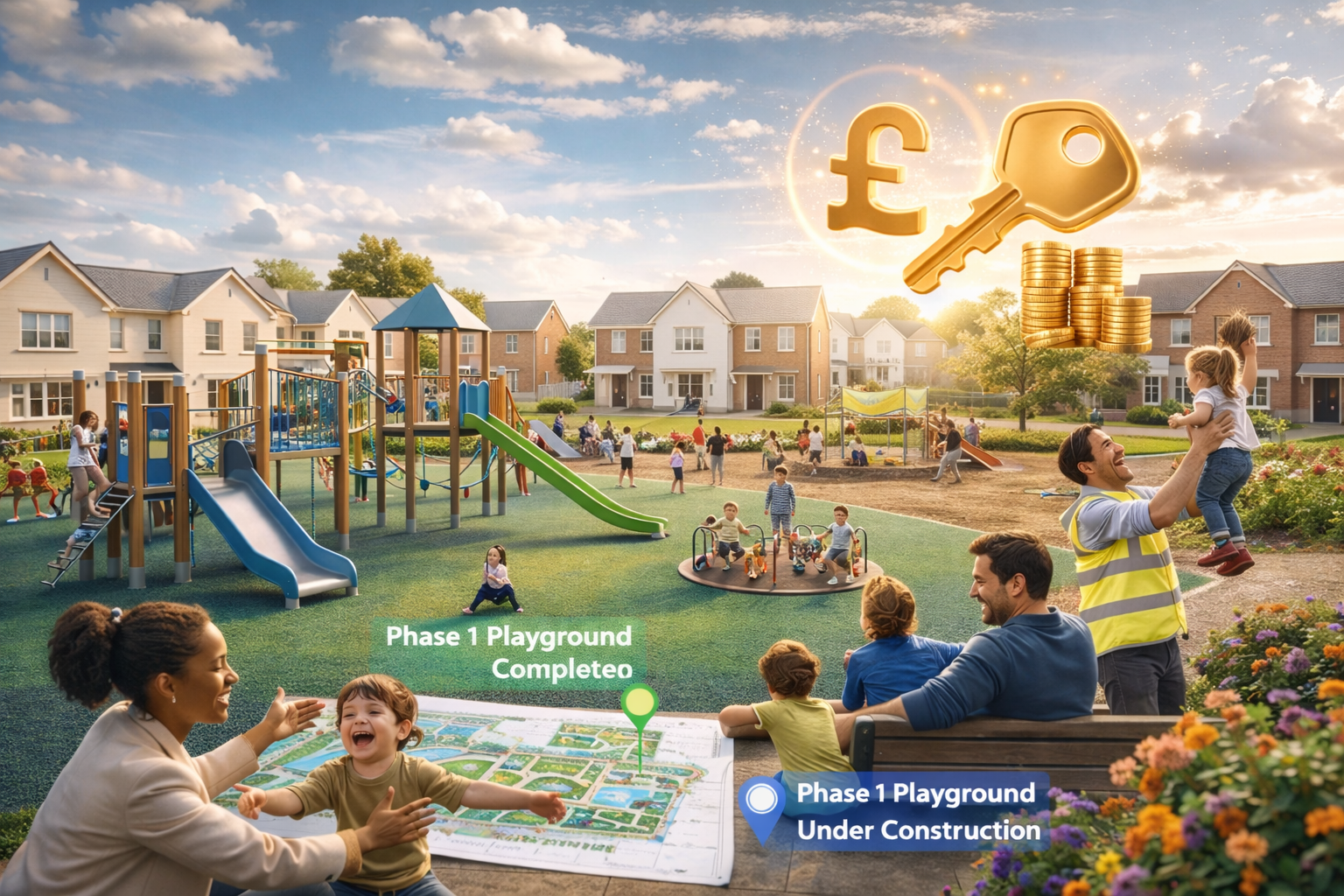
Playgrounds are no longer viewed as planning obligations alone. In modern housing developments, well-designed play spaces are increasingly recognised as strategic assets that enhance placemaking, support sales performance and contribute directly to long-term development value.
For developers and investors, understanding the return on investment generated by playgrounds is essential. Beyond compliance, high-quality play provision improves scheme attractiveness, strengthens community identity and enhances the long-term reputation of residential developments.
This guide explores how playgrounds create measurable commercial value across the development lifecycle — from land acquisition through to sales, occupation and long-term estate performance.
Playground Equipment for Housing Developments
Playgrounds as Strategic Development Assets
Historically, play provision was treated as a minimum planning requirement. Today, leading developers increasingly integrate playgrounds into wider placemaking and destination strategies.
Well-designed play spaces now function as:
- Community focal points
- Marketing assets
- Lifestyle amenities
- Place identity markers
- Long-term retention tools
Rather than reducing value, playgrounds increasingly act as value multipliers when integrated into masterplans from the outset.
Impact on Sales Performance & Marketability
Family buyers and young professionals consistently rank access to outdoor space and child-friendly environments among the most important factors when choosing a home.
High-quality playground provision supports:
- Faster sales rates
- Improved off-plan reservation confidence
- Higher enquiry conversion
- Stronger marketing imagery and brochures
- Enhanced show home surroundings
On large developments, early-phase play areas often become key selling features, particularly on schemes targeting family occupiers.
Developers planning early delivery may find it useful to review Phased Playground Delivery for Large Housing Developments (UK) when aligning sales and infrastructure programmes.
Placemaking, Identity & Community Value
Successful developments are increasingly judged on sense of place, not just unit numbers.
Playgrounds contribute directly to placemaking by:
- Creating visible community hubs
- Encouraging social interaction between residents
- Supporting intergenerational use of public realm
- Enhancing landscape character
- Strengthening neighbourhood identity
Developments with well-integrated play provision often achieve:
- Higher resident satisfaction
- Lower turnover
- Stronger long-term reputation
- Better relationships with local authorities
This placemaking impact also supports future planning applications by demonstrating delivery of high-quality communities.
Long-Term Property Value & Asset Performance
Playgrounds influence value beyond initial sales.
Well-maintained play areas:
- Improve long-term desirability of neighbourhoods
- Support rental retention and occupancy rates
- Reduce resident complaints and churn
- Enhance estate reputation
For institutional investors and build-to-rent operators, amenity quality increasingly affects:
- Valuation assumptions
- Yield stability
- ESG performance metrics
- Long-term asset resilience
Developers considering lifecycle impact may also wish to review Playground Maintenance & Lifecycle Costs for Housing Developments (UK).
Supporting Planning Strategy & Land Promotion
High-quality play provision also strengthens the planning case for residential developments.
Planning authorities increasingly assess schemes on:
- Quality of public realm
- Family suitability
- Inclusive design
- Community infrastructure delivery
- Long-term sustainability
Strong play strategies can:
- Improve planning officer support
- Strengthen design review outcomes
- Reduce objections from consultees
- Accelerate planning approvals
- Support land promotion arguments
This strategic role is particularly valuable on larger sites and urban regeneration schemes.
Inclusion, ESG & Modern Development Expectations
Inclusive playground design now contributes directly to:
- Equality Act compliance
- ESG reporting
- Social value commitments
- Corporate responsibility strategies
Inclusive play spaces:
- Broaden resident demographics
- Support accessible communities
- Strengthen local authority relationships
- Improve brand perception
Developers integrating inclusive features may find further guidance in Inclusive Playgrounds in Housing Developments and Disability Playground Equipment.
Measuring ROI Beyond Capital Cost
While playground capital cost is relatively modest compared to total development value, its influence spans multiple performance metrics:
Indirect ROI includes:
- Sales rate acceleration
- Price premium justification
- Reduced incentives
- Higher enquiry conversion
- Improved customer satisfaction scores
- Enhanced marketing effectiveness
In many schemes, the commercial uplift generated by high-quality play provision significantly outweighs initial installation cost.
Designing for Value from Day One
To maximise ROI, playgrounds should be:
- Integrated into masterplans
- Located visibly within public realm
- Scalable across phases
- Durable and low maintenance
- Inclusive by design
- Aligned with target buyer demographics
Developers who involve playground specialists early typically achieve better outcomes both commercially and operationally.
Playgrounds as Long-Term Value Drivers
Playgrounds are no longer simply compliance items within housing developments. When designed strategically, they become long-term value drivers that enhance sales performance, placemaking quality and asset resilience.
For developers, investors and land promoters, high-quality play provision represents a relatively small capital investment with disproportionate commercial and reputational returns.


