
.svg)
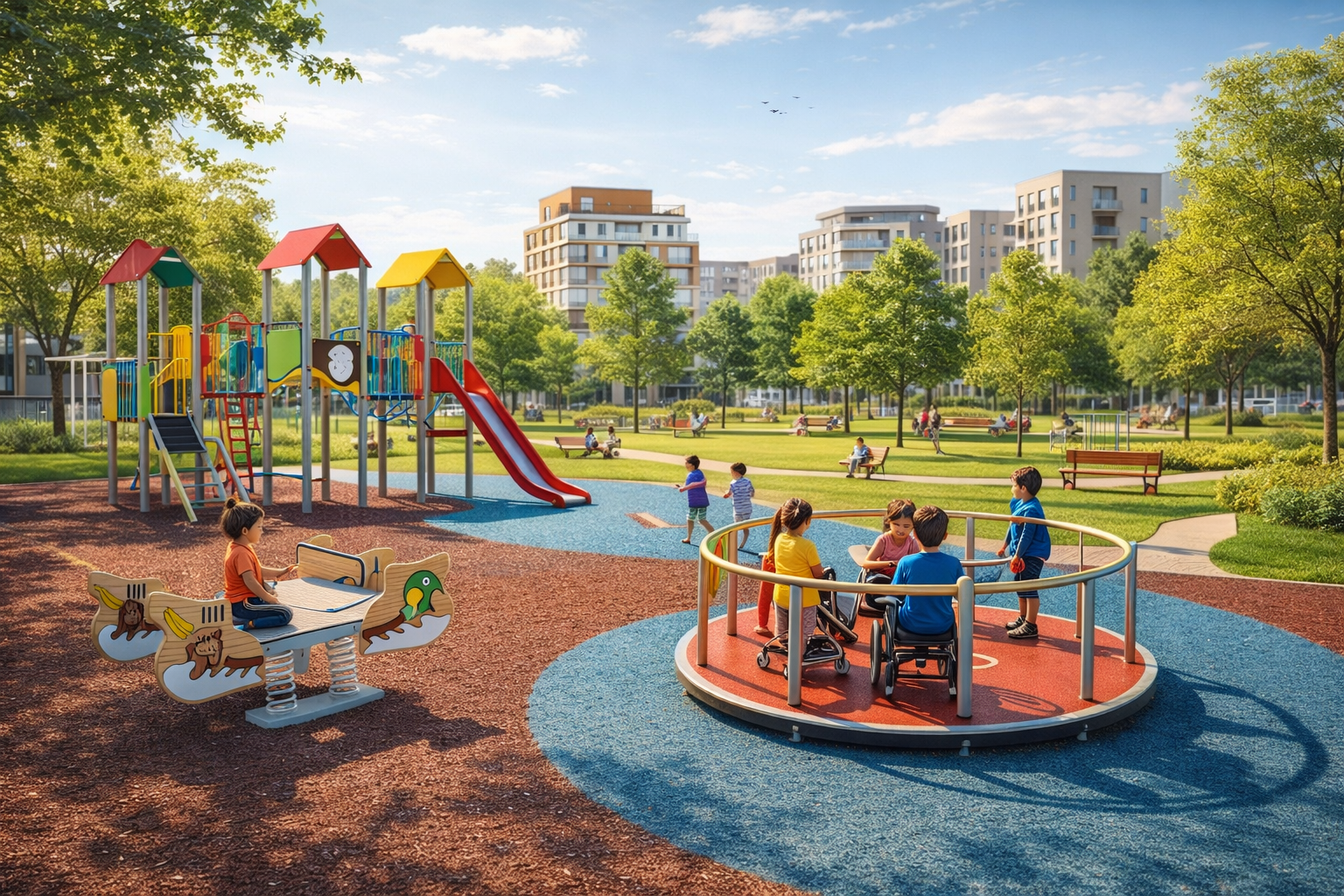


Council Playground Funding & Budgeting: From Section 106 to Sustainable Delivery (UK)
Delivering high-quality public playgrounds is a core responsibility for councils and local authorities across the UK. However, with increasing pressure on budgets, rising expectations around inclusivity, and long-term maintenance considerations, understanding council playground funding and budgeting has never been more important.
From Section 106 and Community Infrastructure Levy (CIL) contributions to grant funding and phased delivery, this guide explains how councils can plan playground projects that are financially sustainable, compliant, and built to last.
Why Playground Budget Planning Matters for Councils
Public playgrounds are long-term community assets. Poor budget planning can result in:
- Incomplete or compromised schemes
- Equipment that fails prematurely
- Increased maintenance costs
- Reduced accessibility and inclusivity
- Missed funding opportunities
By contrast, a well-structured funding and budgeting approach allows councils to deliver play spaces that are safe, inclusive, durable, and adaptable to future needs.
Section 106 Contributions and Play Provision
Section 106 (S106) agreements remain one of the most common funding routes for council playground projects, particularly within new housing developments.
How S106 Supports Playgrounds
S106 contributions are secured from developers to mitigate the impact of new development on local infrastructure. These funds are often allocated to:
- New public play areas within housing schemes
- Improvements to existing parks and playgrounds
- Inclusive and accessible play provision
- Youth and teenage play spaces
Key Considerations for Councils
- Funds are usually site-specific or locality-restricted
- Spending must align with the terms of the agreement
- Timelines may be defined, requiring proactive project planning
- Early design feasibility is essential to avoid underspend or clawback
Community Infrastructure Levy (CIL) and Strategic Play Investment
CIL funding provides councils with greater flexibility than S106 and is often used for larger or more strategic play investments.
What CIL Can Fund
- Town-wide or district-wide playground upgrades
- Destination play spaces
- Multi-site improvement programmes
- Long-term play strategies aligned with health and wellbeing objectives
Because CIL funding is discretionary, councils benefit from having clear playground strategies and costed proposals ready to support internal decision-making.
Grant Funding for Council Playground Projects
Grant funding continues to play a vital role in delivering public play spaces, particularly where council budgets are constrained. Councils must also consider wheelchair-accessible playground equipment to ensure public spaces meet equality and accessibility expectations.
Common Grant Sources
- National and regional lottery funding
- Environmental and community wellbeing grants
- Health and physical activity initiatives
- Charitable trusts and foundations
Making Grant Funding Work
Grant-funded playgrounds often succeed when councils can demonstrate:
- Community consultation and engagement
- Inclusive and accessible design principles
- Clear social, health and wellbeing outcomes
- Long-term maintenance planning
Aligning playground designs with funding criteria early improves both success rates and delivery timescales.
Phased Delivery: Building Playgrounds Over Time
Phased delivery is an increasingly popular approach for councils seeking to balance ambition with budget realities. In many areas, councils coordinate public play investment alongside school playground improvement programmes, creating shared community value.
What Is Phased Playground Delivery?
Rather than delivering all equipment at once, councils can plan projects in stages, for example:
- Phase 1: Core inclusive equipment and surfacing
- Phase 2: Additional play value or age-specific equipment
- Phase 3: Landscaping, seating or enhancements
Benefits of Phasing
- Enables delivery within annual budget cycles
- Reduces financial risk
- Allows community feedback to inform later phases
- Supports funding applications for future stages
Phased delivery also helps ensure playgrounds evolve with community needs rather than becoming static installations.
Budgeting Beyond Installation: Whole-Life Cost Planning
For councils, the true cost of a playground extends far beyond initial installation.
Whole-Life Cost Considerations
- Durability of materials
- Inspection and maintenance requirements
- Replacement cycles
- Surfacing lifespan
- Accessibility upgrades over time
By prioritising quality materials and compliant installation, councils reduce long-term revenue spend and improve asset longevity. Many funding bodies now prioritise accessibility, meaning inclusive playground equipment for public spaces is often a key requirement when securing grants or allocating capital funding.
Designing Playgrounds That Deliver Long-Term Value
Strong budgeting decisions are supported by thoughtful design choices. Equipment selected for public use should:
- Withstand high footfall
- Support inclusive, multi-age play
- Meet EN 1176 safety standards
- Be appropriate for open, unsupervised environments
When funding is limited, focusing on versatile, shared-use equipment often delivers greater value than overly specialised installations.
Supporting Councils from Concept to Completion
At Morti Sport & Play, we regularly support councils and local authorities by:
- Advising on funding-led design approaches
- Developing phased playground layouts
- Aligning equipment choices with budget constraints
- Supporting compliance and installation planning
Understanding council playground funding and budgeting is essential to creating public play spaces that are not only deliverable today, but sustainable for years to come.
This funding-led approach works best when aligned with early-stage planning, as explored in our guide to designing council playgrounds for public spaces.
Next Step
If you’re planning a council-led playground project and would like support navigating funding routes, budgeting or phased delivery, our team is happy to help guide you through the process.
Further Guidance on Council Playground Funding
Council playground funding is governed by a combination of planning obligations, local authority policy and national guidance. For officers seeking official information on funding routes, the following government resources provide useful reference points for Section 106 agreements, Community Infrastructure Levy (CIL), and capital funding frameworks.
Local authorities can find guidance on planning obligations and developer contributions through UK government planning policy resources, while CIL frameworks are typically set and administered at local authority level. Grant funding opportunities are often supported by national, regional and charitable bodies, each with their own eligibility criteria and reporting requirements.
While official guidance explains how funding mechanisms operate, translating this into a deliverable playground project requires early planning, cost clarity and phased design thinking. Councils planning new or refurbished play spaces can explore Council Playground Equipment (UK) to see how funding, budgeting and phased delivery are applied in real-world public play projects.


